


The UK’s social housing sector is under pressure to do more than just maintain homes. Rising energy costs, decarbonisation targets, and changing tenant expectations are all driving the need for smarter, more sustainable housing stock. At the centre of this shift is social housing retrofit — a strategic process of upgrading properties to improve energy performance, safety, and long-term value.
While retrofit has traditionally been viewed as a separate capital programme, many housing providers are now realising that it works best when aligned with everyday maintenance and asset management. That is where organisations like Cardo Group play a vital role — helping clients integrate retrofit with planned maintenance for social housing, compliance, and long-term asset strategies.
In this blog, we explore why retrofit is essential, how it connects to broader housing goals, and what innovations are changing the way retrofit is delivered.
Retrofit involves improving existing homes by upgrading insulation, windows, ventilation, heating systems and other components. The goal is to reduce carbon emissions, cut energy bills, and create warmer, safer homes for residents. In the context of social housing, retrofit is not just an environmental issue — it is also a matter of health, comfort and affordability.
Many of the UK’s social homes were built decades ago. As a result, they often have poor energy efficiency ratings and lack modern safety or environmental features. Without intervention, these homes risk falling below legal standards and causing long-term hardship for residents.
Retrofit supports several key priorities for housing providers:
Cardo Group supports clients by embedding retrofit planning into their wider service delivery, ensuring that every opportunity for improvement is captured during routine works.
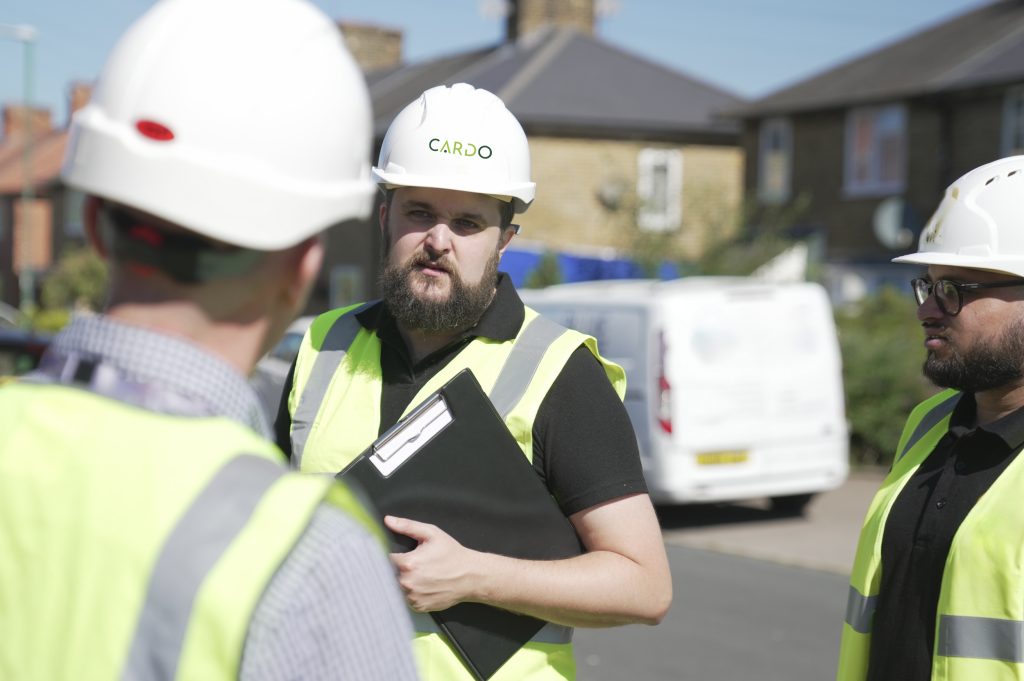
Too often, retrofit is seen as a one-time investment rather than part of a larger strategy. In reality, many retrofit upgrades can and should be delivered alongside planned maintenance for social housing. This helps providers make better use of budgets, minimise disruption to residents, and avoid duplicating effort.
For example, if a roof replacement is scheduled, that is also an ideal time to improve insulation. If new windows are being fitted, upgrading to triple glazing with improved seals makes sense. By layering retrofit into existing works, housing providers achieve more for less.
Cardo Group’s integrated delivery model ensures that planned maintenance teams are trained to spot retrofit opportunities and report them into the asset management system. This alignment turns reactive upgrades into part of a proactive improvement cycle.
Effective retrofit starts with data. Housing providers need to understand which properties require upgrades, what type of improvements will be most impactful, and how these fit into long-term capital planning. That is where asset management for social housing becomes critical.
Cardo Group works with clients to:
With this information in hand, providers can target the right homes, coordinate works with other service lines, and ensure that retrofit delivers measurable value.
The tools and methods available to deliver retrofit are constantly evolving. Today’s building maintenance innovations allow for smarter installations, less invasive work, and faster results.
Some of the innovations Cardo Group uses in retrofit delivery include:
By embracing innovation, housing providers can reduce disruption, increase tenant satisfaction, and future-proof their homes.
One of the biggest risks to retrofit programmes is poor communication. If residents do not understand the purpose of the works or how upgrades affect their daily lives, they may miss appointments, refuse access, or feel resentful about disruption.
Cardo Group places resident engagement at the heart of its retrofit model. This includes:
By treating residents as partners in the process, housing providers build trust and increase the success of retrofit delivery.
Social housing organisations are already under pressure to meet a wide range of compliance requirements. From fire safety to water hygiene, gas checks to electrical inspections, the list of obligations is growing. Rather than running these as separate systems, Cardo Group helps clients bring them together.
When compliance, planned maintenance for social housing, and retrofit are aligned, housing providers achieve:
This whole-home approach turns housing maintenance into a strategic function — one that delivers safety, sustainability and value.
Retrofit is not a one-year initiative. Achieving full compliance with net-zero or energy efficiency targets requires long-term planning, consistent delivery, and reliable funding models.
Cardo Group helps clients develop ten-year and twenty-year asset strategies that balance retrofit goals with other priorities. This ensures that housing organisations are not simply reacting to short-term funding but building a stable, sustainable model for ongoing improvement.
With clear data, integrated teams, and defined KPIs, retrofit becomes a normal part of housing operations — not an added burden.

Social housing retrofit involves upgrading homes in the public sector to improve their energy efficiency, safety and overall quality. This includes insulation, heating systems, ventilation, windows and other features that reduce energy use and improve comfort. Retrofit helps housing providers meet environmental targets and improve the lives of residents.
Retrofit is essential for improving outdated housing stock. Many social homes are poorly insulated or inefficient, leading to high energy bills and poor living conditions. Retrofit helps reduce fuel poverty, cut carbon emissions and make homes more comfortable and affordable for tenants.
Planned maintenance involves routine, scheduled works such as roof repairs, window replacements and heating checks. These are natural points to introduce energy-efficient upgrades. Combining retrofit with planned maintenance reduces disruption, saves money and makes housing improvements more efficient.
Recent innovations include smart heating controls, low-carbon heat systems, digital air quality monitors and modular installations that make works quicker and cleaner. Digital tools also help track performance and communicate with residents, improving service delivery and accountability.
Asset management provides the data and planning framework needed to deliver retrofit effectively. By tracking housing condition, energy performance and resident needs, providers can prioritise upgrades, coordinate works and measure outcomes. A good asset management system is the foundation for successful retrofit programmes.
Retrofit is not just about new boilers or insulation. It is about transforming homes, improving lives and future-proofing public housing. By integrating retrofit into planned maintenance for social housing, aligning it with compliance goals, and using modern tools and techniques, housing providers can do more with every project.
At Cardo Group, we help clients deliver smarter, safer homes by combining asset management for social housing, maintenance expertise and retrofit innovation. Our team works across the UK to design programmes that are data-led, resident-focused and built for long-term impact.
Work with Cardo Group to make social housing retrofit part of your everyday housing strategy — and build homes that work for the people who live in them now and for decades to come.