


With regulatory scrutiny increasing and environmental targets tightening, landlords, housing associations, and developers across the UK are facing complex decisions around property maintenance, upgrades, and investment. Two terms often dominate these conversations: housing compliance and retrofit.
Yet, confusion is common. Are they the same thing? Is one more urgent than the other? And can you address both at the same time?
In this article, we’ll clarify the differences between housing compliance and retrofit, explain why both are critical for long-term housing success, and outline how Cardo Group supports clients across the UK with a single, integrated solution that addresses both safety and sustainability.
Housing compliance refers to meeting the legal and regulatory standards that make a property safe, habitable, and lawful to rent or occupy. These standards are set by UK legislation, regulators, and local authorities and are non-negotiable for property owners and managers.
Compliance is about meeting the minimum standard of what’s required by law. But in today’s housing climate, that’s no longer enough.
Housing retrofit, by contrast, refers to the process of upgrading existing homes to improve their energy efficiency, reduce carbon emissions, and make them more environmentally sustainable.
Retrofit is not legally mandated (yet), but it is strongly encouraged—and increasingly expected—as part of the UK’s strategy to reach Net Zero by 2050.
In short, retrofit is about going beyond compliance—to create homes that are not just safe, but future-ready, affordable, and environmentally sound.

The scale of the UK’s retrofit challenge is immense:
Meeting these goals will require coordinated investment, skilled delivery partners, and a clear framework for landlords and housing associations to follow.
Recognising the urgency, the UK government has introduced several funding schemes to support housing retrofit:
Targeted at local authorities and housing associations, SHDF provides capital funding to upgrade social housing with EPC ratings below C.
Funded by energy suppliers, ECO4 supports energy efficiency upgrades for low-income and vulnerable households in private and social rented sectors.
Focused on off-gas grid homes, this scheme funds insulation and low-carbon heating measures.
Empowers councils to deliver energy efficiency measures in low-income areas.
To access this funding, retrofit projects must meet PAS 2035 standards—something Cardo Group has embedded into its operations from the outset.
Cardo Group is at the forefront of the UK’s retrofit movement, working with housing associations, councils, and landlords to upgrade homes in line with Net Zero goals.
Cardo Group offers a full-service approach to housing retrofit, including:
Whether it’s a single dwelling or a large estate, Cardo Group’s in-house teams and partner network ensure each project is tailored, cost-effective, and quality-assured.
From loft insulation to cavity and solid wall treatments, Cardo improves thermal performance and minimises heat loss. All work complies with Building Regulations and PAS standards.
Replacing old gas boilers with air-source heat pumps or hybrid systems. These units deliver lower emissions and integrate with modern heating controls.
Installing solar PV panels and battery storage systems to generate and retain clean energy. This reduces tenants’ energy bills and dependency on the grid.
Mechanical ventilation systems (such as MVHR) are installed to prevent condensation and mould while recovering heat from outgoing air. This boosts indoor air quality and preserves the building fabric.
While specific case studies remain confidential, Cardo Group has delivered retrofit programmes across:
Each project is carefully documented, PAS-compliant, and monitored for performance to help housing providers demonstrate value and secure future funding.
Retrofit programmes can be complex. Cardo Group helps clients overcome typical challenges such as:
With multiple schemes available, Cardo helps navigate eligibility, applications, and match funding.
Retrofits can be disruptive. Cardo supports with tenant liaison, clear communication, and post-installation support.
Cardo invests in training and development, building a competent workforce of retrofit assessors, coordinators, and installers.
Not all homes are the same. Cardo tailors design solutions to account for heritage buildings, off-grid locations, and non-standard construction types.
As energy prices fluctuate, climate targets tighten, and tenants demand more efficient homes, housing retrofit will continue to dominate the UK’s housing agenda.
Future developments may include:
Housing providers that start now will be best placed to meet upcoming standards, access funding, and protect their housing stock.
PAS 2035 is the retrofit standard that governs how energy efficiency upgrades must be assessed, designed, and verified. Compliance is mandatory for funded work under SHDF and ECO4.
Cardo Group conducts retrofit assessments using RdSAP software and onsite surveys to determine suitability, risk, and benefit.
It varies by property type and scope. A simple insulation job may take a few days, while whole-house retrofits can take weeks. Cardo provides full timelines and resident support throughout.
Cardo minimises disruption through careful planning, clear communication, and out-of-hours working where needed. Resident wellbeing is always a priority.
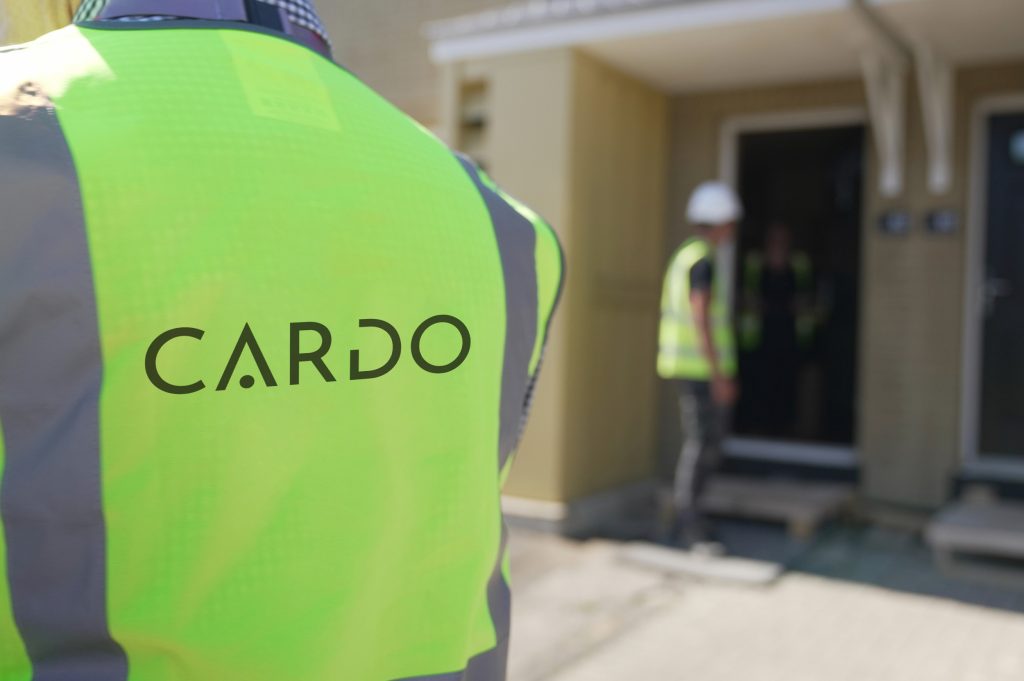
The future of housing retrofit is already here—and organisations that act early will benefit most. Cardo Group is proud to partner with landlords, councils, and housing associations across the UK to deliver sustainable, compliant, and cost-effective retrofit solutions.
Learn how Cardo Group can support your housing retrofit goals and join the movement toward a safer, greener housing future.